CardSense
App comparison
Best Sports Card Scanner App: 4 Scanners Compared
Every scanner promises to identify your cards and tell you what they are worth. They differ in what happens next: selling, TCG, grading, or tracking a collection.
Direct answer
The best sports card scanner app depends on what you want after the scan. Choose CardSense for identification, eBay-based values, and collection tracking on iPhone. Choose CollX for a built-in marketplace. Choose Ludex if you also collect trading card games or use Android. Choose StarSnap if grading guidance matters most.
First, the disclosure
CardSense is our app. This site exists to support it. Instead of a rigged ranking, this comparison sticks to what each app says about itself on its public listing or website (checked August 2026) and says which collector each one fits. Where CardSense is not the right choice, it says so.
The four apps at a glance
| CardSense | CollX | Ludex | StarSnap | |
|---|---|---|---|---|
| Focus | Identify, value, track sports cards | Scan plus buy/sell marketplace | Sports cards and TCG | Scan with grading guidance |
| Platform | iPhone, iOS 18.2+ | iPhone (marketplace in-app) | iOS and Android | iPhone |
| Pricing data | Recent eBay sales | Own sales database | Price guide plus TCG | Market data plus grade hints |
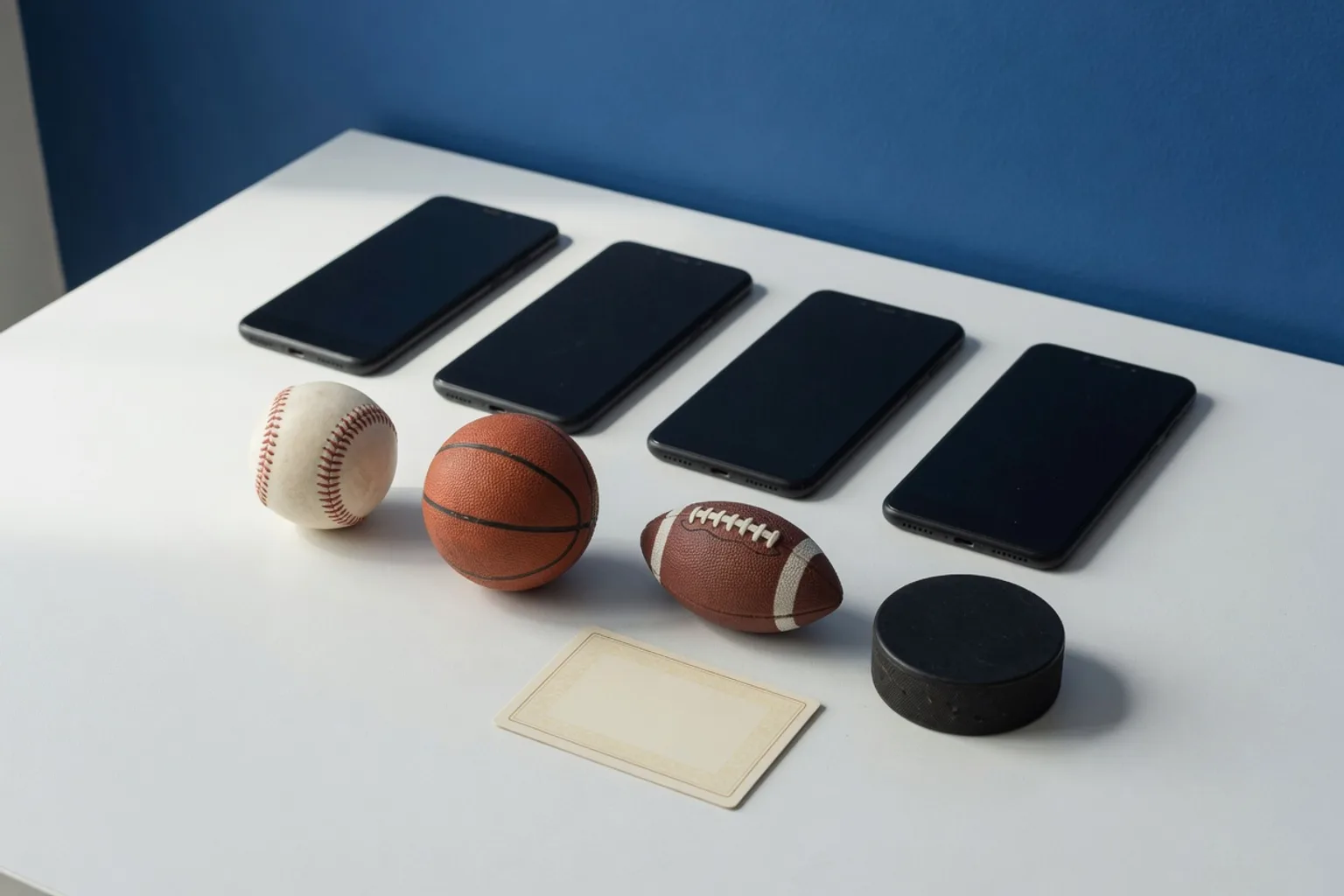
| Sports | Baseball, basketball, football, hockey, soccer | Sports cards broadly | Sports plus TCG | Sports cards |
| Download | Free, premium for unlimited scans | Free with marketplace features | Free with premium tier | Free with premium tier |
How to choose
If you want a marketplace in the same app, CollX is built for that. If you collect Pokémon as well as sports, or you need Android, Ludex fits better. If you are trying to decide whether to submit for grading, StarSnap leans that way. If you want a fast ID, an eBay-based number, and a vault on iPhone, that is CardSense.
No scanner is perfect. Identification is hardest on parallels that differ in small details. Let the app ID the card, then glance at the year, set, and number it returns before you trust the estimate.
What "best" cannot mean
Google for this query is a pile of App Store listings, Reddit threads, and each company's own site. There is no independent lab score. Accuracy claims in marketing copy are not something this page will repeat as fact. A useful comparison is jobs: marketplace, TCG, grading guidance, or a clean identify-and-track loop on iPhone.
CardSense does not buy or sell cards, does not scan Pokémon, and does not run on Android. If those are requirements, pick the app that lists them. If you want eBay-based comps and a vault after the scan, stay. The rest of this site is the method behind the numbers: sold prices, the five value factors, and sport-specific pages when the cardboard is baseball-heavy.
Accuracy, platforms, and the hardware red herring
Reddit threads about "fastest scanner" are useful for software feel and less useful for a single accuracy percentage. Parallels that differ in a thin foil line will fool every camera app some of the time. The workable habit is: scan, read the set line, then trust the comps.
Google also ranks physical document scanners for this query. Those machines digitize a collection. They do not identify a 1986 Fleer from a living-room photo. If you wanted a Fujitsu, you are on the wrong page. If you wanted an iPhone app, compare the four above and download the one whose after-scan job matches yours.
Sources
FAQ
App comparison FAQ
Do sports card scanner apps work on Android?
Some do. Ludex lists iOS and Android. CardSense is an iPhone app (iOS 18.2+) and has no Play Store listing.
Can these apps scan Pokémon and other trading card games?
CollX and Ludex both list support for trading card games such as Pokémon alongside sports cards. CardSense is built for sports cards: baseball, basketball, football, hockey, and soccer.