CardSense
Price guide
Sports Card Prices: How to Check What Cards Really Sell For
Listed prices tell you what sellers hope for. Sold prices tell you what cards trade for. Here is how to read the second number.

Direct answer
The price of a sports card is what buyers recently paid for it in comparable condition. Identify the exact card, then look at completed sales and read the average, median, and range rather than a single result.
Asking prices vs sold prices
Marketplaces mix two numbers. An asking price is what a seller wants. A sold price is what a buyer paid. Only the second one is a data point. Hopeful listings can sit for months. When someone says a card "goes for" a number, ask: listed, or sold?
Where sports card prices come from
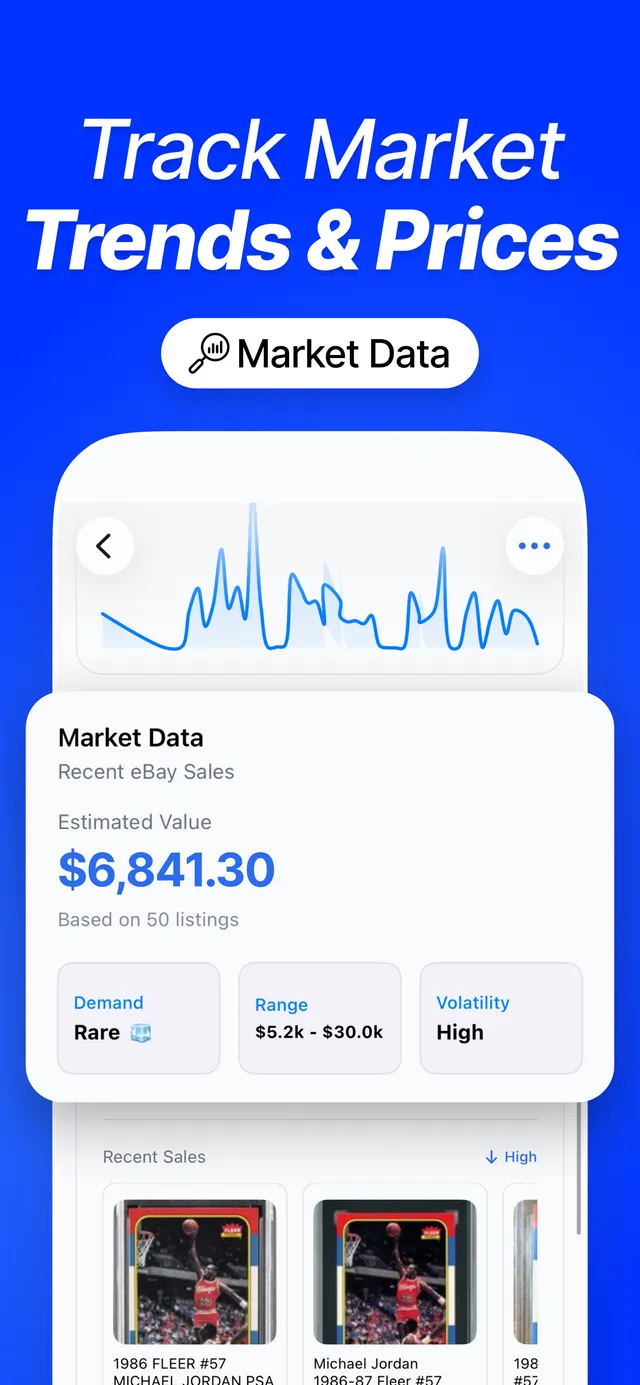
For most cards, the reference market is eBay. It hosts the most completed sports card sales across sports, eras, and price brackets. That is why CardSense builds estimates on recent eBay sales. Six-figure cards also trade at specialist auctions, but for the cards in a typical binder, recent eBay sales are the market.
How to read card prices
One sale is an anecdote. A cluster of recent sales is a price.
| Metric | What it tells you |
|---|---|
| Average | The mean of recent sales. Useful, but a single outlier can pull it. |
| Median | The middle sale. Often the saner "typical" price. |
| Range | Low to high. A wide range means condition, timing, or thin trading. |
| Price history | Whether the last months climbed, dipped, or sat still. |
Mistakes that inflate a number
- Comparing your raw card to a PSA 10 sold listing.
- Using an active auction bid as a sold price.
- Ignoring shipping, or mixing domestic and international comps.
- Pricing a parallel against the base card because the photo matches.
How often prices move
Constantly, for anything with a pulse. Games, playoffs, awards, injuries, and collector hype all hit. Popular modern cards can move week to week, which is why a chart beats a printed annual. For the five factors behind those moves, read what determines sports card value.
A practical sold-listings workflow
Search the exact player, year, set, and card number. Add the parallel name or serial range if you have one. Filter to sold and completed. Ignore auctions that ended with one weird bid and a lot of watchers but no second bidder. Prefer a handful of sales from the last 30 to 90 days over a two-year-old outlier.
Match condition. A raw near-mint copy is not a PSA 10, and a PSA 8 is not a raw "looks fine in the photo" card. If you only find graded comps, say so to yourself and discount. If you only find raw comps and you plan to sell graded, you do not have the number yet.
Shipping and fees are part of the price. A $40 card plus $8 shipping is not a $40 sale. International postage makes this worse. When an app shows a range from recent eBay sales, treat that range as a snapshot of completed prices, then sanity-check two or three of the underlying listings if the card is valuable enough to argue about.
When a scanner helps, and when it does not
A scanner earns its keep when you do not know the set. It is weaker when the card is so rare that three sales exist in a year, or when the photo is a bad crop of a foil that fools the model. In those cases, do the manual sold search anyway. The app is a first pass, not a closing price for an auction house lot.
Sources
FAQ
Price guide FAQ
Why are asking prices so much higher than sold prices?
Anyone can list a card at any price. Optimistic sellers often ask several times what the card actually trades for. A card is only worth what a buyer pays, so completed sales are the reference, not active listings.
What if there are no recent sales of my card?
Thinly traded cards are harder to price. Look at the closest comparables: the same card in a different grade, the same player in a similar set, or a nearby serial-number range. A wide estimated range is normal when few copies trade.