CardSense
Basketball scanner
Basketball Card Scanner: Identify NBA Cards from a Photo
The same rookie photo can be a base card, a colored parallel, or a 1/1. A scan is how you find out which one you are holding.
Direct answer
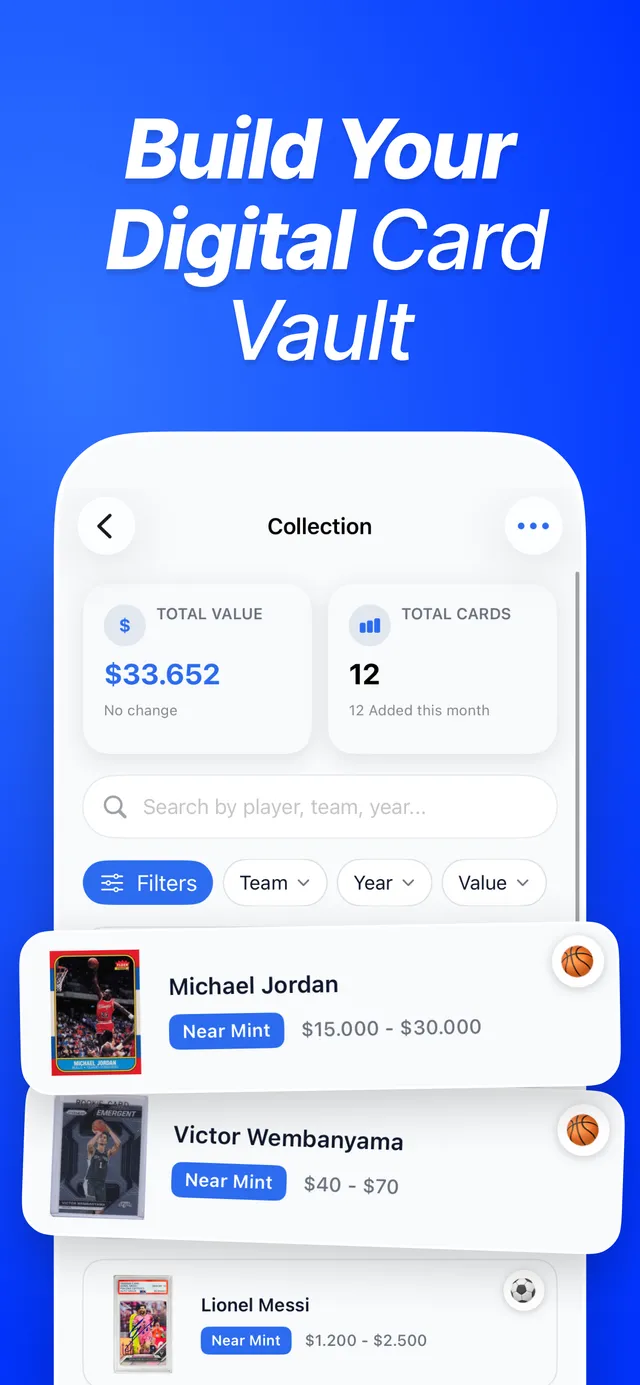
A basketball card scanner identifies an NBA card from a photo, including the parallel, and shows an estimated value from recent eBay sales. CardSense returns player, team, year, set, card number, and rarity. That last field is the one that usually decides whether two cards that look alike are worth pocket change or real money.
Parallels are why basketball needs a scan
NBA sets have stacked chase cards on base sets since the 1990s. Searching by player name returns the common version. The card in your hand might be a refractor, a color, or a numbered copy of the same photo. Basketball card values covers why that gap is larger here than in most other sports.
A practical scan session
Start with rookies, anything with an RC logo, and anything that looks like a parallel. Confirm the ID against the tiny set line on the back. Then look at the estimate. If you are triaging a binder, save the hits and leave the base commons for last.
Light, borders, and the parallel you actually hold
Basketball parallels live in the borders and the foil. Crop too tight and you throw away the evidence. Shoot in light that does not blow out a refractor into a white rectangle. If the card has a serial stamp, it should appear in the photo and in the ID.
When the estimate comes back, compare it to one or two sold listings of that same parallel. If the app named the base card and you are holding a color, the number is wrong even if the player is right. That is the failure mode this page exists to prevent. Market context: basketball card values.
1990s inserts in a modern binder
A lot of "scan my basketball cards" sessions are really "is this insert the famous one." Pack-odds chase cards from the 1990s still confuse people because the photo looks like the base set. Shoot the whole front, including any logo strip or foil pattern the insert uses, then confirm the set name on the back.
Vintage NBA cardboard is a different session: fewer issues, nastier condition problems, bigger grade gaps. Identify first. Then decide whether the copy is even close to the comps you saw for clean examples. A scanner names the card. It does not magically restore corners.
If you collect both modern parallels and 90s inserts, keep them in different folders. The vault total is more useful when a spike in one era does not hide a pile of commons in the other. Scan, confirm the set line, save the hits. Leave the rest of the base rainbow for a rainy Saturday.
CardSense is iPhone-only. If you need Android or a built-in marketplace, pick another app from the scanner comparison. This page is the capture step for NBA cardboard: photo, confirm, read the parallel, then decide keep, sell, or grade.
Sources
FAQ
Basketball scanner FAQ
Can I scan inserts and refractors, not just base NBA cards?
Yes. CardSense lists inserts, parallels, autographs, and memorabilia cards among the things it identifies. Inserts from the 1990s are exactly the cards where a photo search by player name fails.
Does the scanner work on vintage basketball cards?
It is trained across eras, including older Topps and Fleer issues. Survival and grade matter more on vintage than on a modern parallel, so after the ID, look at corners and surface before you treat the estimate as a sale price.